Category: astronomy

  • JEE Advanced 2025 Results Announced: Rajit Gupta Secures Top Rank

    JEE Advanced 2025 Results Announced: Rajit Gupta Secures Top Rank

    IIT Kanpur has released the JEE Advanced 2025 results, revealing Rajit Gupta as the top scorer. Over 54,000 candidates have qualified, with JoSAA counselling commencing for seat allocation in premier institutes.

    The Indian Institute of Technology (IIT) Kanpur has announced the results of the Joint Entrance Examination (JEE) Advanced 2025. This high-stakes engineering entrance exam, conducted on May 18, saw participation from 1,80,422 candidates across two shifts. Rajit Gupta from the IIT Delhi zone has emerged as the top scorer, securing All India Rank (AIR) 1 with an impressive score of 332 out of 360 marks. Meanwhile, Devdutta Majhi from the IIT Kharagpur zone topped among female candidates, securing the 16th rank with 312 marks. Over 54,000 students have passed this year’s exam, including more than 9,000 successful female candidates, highlighting the growing presence of women in engineering fields. [1]

    Top Performers and Regional Highlights

    JEE Advanced 2025 was conducted across seven IIT zones: Bombay, Delhi, Guwahati, Kanpur, Kharagpur, Madras, and Roorkee. Each zone released a list of their top performers, with Rajit Gupta leading the overall rankings. The exam, known for its rigor, tested candidates in both Paper 1 and Paper 2. This year’s results reflect a noteworthy performance by male candidates, who dominate the top 15 positions in the overall merit list. The results were made available on the official website, jeeadv.ac.in, where candidates can also access the final answer keys. [2]

    JoSAA Counselling Process Begins

    Following the announcement of results, successful candidates are now eligible to participate in the Joint Seat Allocation Authority (JoSAA) counselling process, which commenced on June 3, 2025. This process is crucial as it facilitates admissions into India’s premier institutions, including IITs, NITs, IIITs, and other government-funded technical institutes (GFTIs). Candidates must register and fill in their choices by June 12, 2025, leading up to the Round 1 seat allotment results scheduled for June 14. Those who cleared the Architecture Aptitude Test (AAT) must also register within this timeframe. [3]

    Intense Competition and Lower Cut-Offs

    The JEE Advanced 2025 witnessed intense competition, with a significant drop in cut-off marks compared to previous years. This change has made the results particularly noteworthy for aspiring IITians. Candidates aiming to secure a place in top engineering programmes must now focus on the JoSAA counselling process, as seat allocation is based on ranks, filled choices, and availability. The cut-off details and qualifying scores for various categories were released alongside the results, providing candidates with clear benchmarks for their performance. [4]

    Upcoming Deadlines and Important Instructions

    Candidates are advised to regularly check the official JoSAA website for updates on the counselling schedule and important instructions. The counselling process requires candidates to be vigilant about deadlines, starting with registering and locking in their choices by June 12. The detailed counselling schedule, process of seat allocation, and other related updates are crucial for candidates to follow to ensure a smooth admission process into their desired institutes. [5]
  • Chandrayaan-3: India’s lunar lander Vikram searches for safe Moon landing spot

    India’s space agency has released images of the far side of the Moon as its third lunar mission attempts to locate a safe landing spot near the little-explored south pole.

    The pictures have been taken by Vikram, Chandrayaan-3’s lander, which began the last phase of its mission on Thursday.

    Vikram, which carries a rover in its belly, is due to land on 23 August.

    The photos come a day after Russia’s Luna-25 spacecraft crashed into the Moon after spinning out of control.

    The craft – Russia’s first Moon mission in nearly 50 years – was due to be the first ever to land on the south pole, but failed after encountering problems as it moved into its pre-landing orbit.

    On Monday morning, the Indian Space Research Organisation (Isro) said the lander from Chandrayaan-3, which is due to touch down on Wednesday at 18:04 India time (12:34 GMT), has been mapping the landing area and taking images with its “hazard detection and avoidance” camera.

    Isro added that the black-and-white images sent by this camera will assist them “in locating a safe landing area – without boulders or deep trenches”.

    The lunar far side is the side that faces away from the Earth and is sometimes also called “the dark side of the Moon” because so little is known about it. Scientists say landing there can be a tricky affair.

    But there’s a lot of interest in this part of the Moon which scientists think could hold frozen water and precious elements.

    Isro said on Sunday that the lander module had been successfully lowered into an orbit closer to the Moon (of 25km by 134km) and is now waiting for the lunar Sun-rise to land.

    If Chandrayaan-3 is successful, India will be first to land near the lunar south pole. It will also be only the fourth country to achieve a soft landing on the Moon after the US, the former Soviet Union and China.

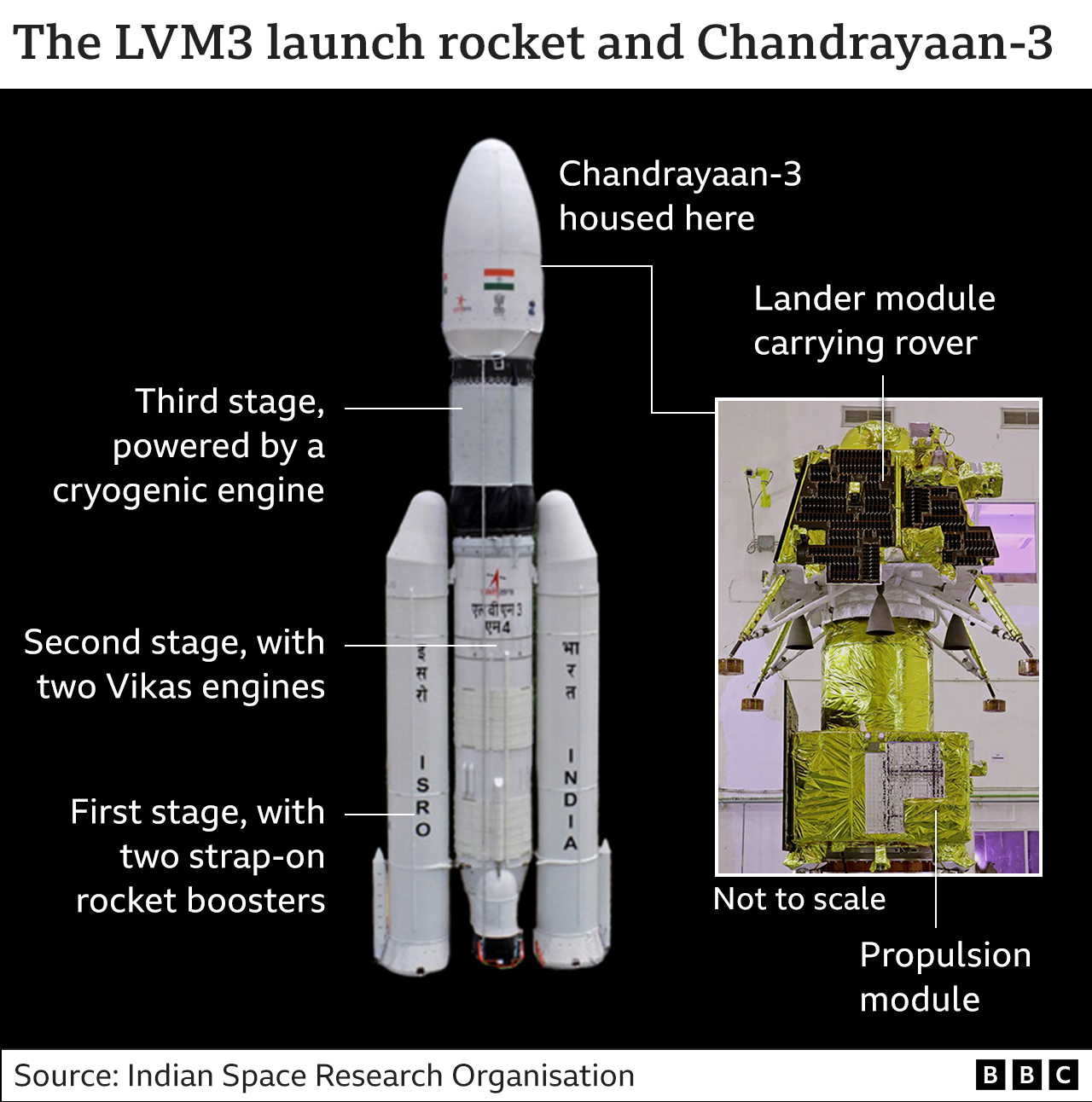
    Graphic showing the LVM3 launch rocket, with three engine phases, and where the Chandrayaan-3 will be while it it carried into orbit

    The third in India’s programme of lunar exploration, Chandrayaan-3 is expected to build on the success of its earlier Moon missions.

    It comes 15 years after the country’s first Moon mission in 2008, which discovered the presence of water molecules on the parched lunar surface and established that the Moon has an atmosphere during daytime.

    Chandrayaan-2 – which also comprised an orbiter, a lander and a rover – was launched in July 2019 but it was only partially successful. Its orbiter continues to circle and study the Moon even today, but the lander-rover failed to make a soft landing and crashed during touchdown.

    Isro chief Sreedhara Panicker Somanath has said that the space agency had carefully studied the data from its crash and carried out simulation exercises to fix the glitches in Chandrayaan-3, which weighs 3,900kg and cost 6.1bn rupees ($75m; £58m). The lander module weighs about 1,500kg, including the 26kg-rover Pragyaan.

    The south pole of the Moon is still largely unexplored – the surface area that remains in shadow there is huge, and scientists say it means there is a possibility of water in areas that are permanently shadowed.

    One of the major goals of Chandrayaan-3 is to hunt for water ice, which scientists say could support human habitation on the Moon in future. It could also be used for supplying propellant for spacecraft headed to Mars and other distant destinations.

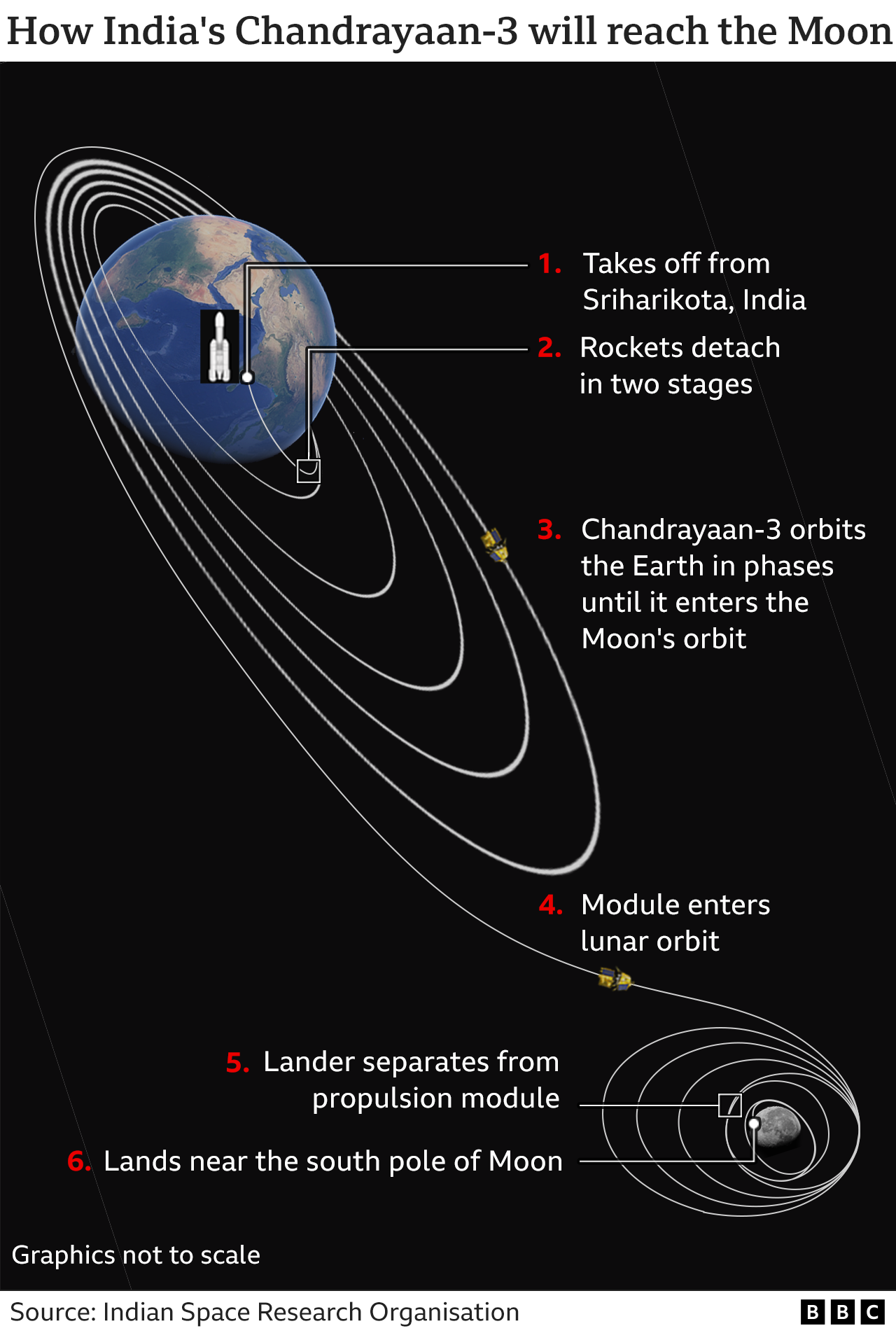
    Graphic showing how the Chandrayaan-3 will get to the Moon, from take off, to orbiting the Earth in phases until it reaches the Moon's orbit, when the lander will separate from the propulsion module before landing near the Moon's south pole
  • Super Bowl 2024 was most watched US TV broadcast since 1969 Moon landing

    Taylor Swift and Travis Kelce

    By Emma Saunders

    Entertainment reporter

    This year’s Super Bowl was watched by an average of 123.4 million people in the US, making it the most watched broadcast since the 1969 Moon landing.

    Preliminary US TV ratings put Sunday’s game just behind Apollo 11’s historic landing, which was seen by an estimated 125 to 150 million people.

    Kansas City Chiefs beat the San Francisco 49ers 25-22 in overtime.

    Taylor Swift’s highly anticipated attendance to watch boyfriend Travis Kelce may have boosted the figures.

    There was much speculation in the run-up to the event about whether Swift would make it back from Japan, where she had been performing on tour.

    According to Variety, there is some debate over how much she affected audience numbers, but consumer research firm Numerator concluded from a flash poll that 20% of Super Bowl viewers were rooting for the Chiefs because of the singer’s relationship with Kelce.

    The cameras were certainly enjoying the Swift factor, including shots of the star entering the arena, hanging out with actress Blake Lively and rapper Ice Spice, and kissing Kelce after the match as they celebrated the win.

    Of this year’s viewers, 112 million of the 123.4 million average watched the game on CBS, with the rest tuning into Paramount+, Nickelodeon, Univision, CBS Sports and NFL digital channels.

    According to media analysts Nielsen, a record 202.4 million people watched at least part of the game.

    This year’s figures may have also been helped by the fact Nielsen has changed the way it counts people watching out of their own homes – for example with friends or family, or in bars.

    Last year’s Super Bowl game between the Chiefs and the Philadelphia Eagles was watched by 115.1 million viewers.

    Usher and Jennifer Goicoechea
    Image caption,Usher topped off the weekend by marrying his girlfriend Jennifer

    The fact the Chiefs were defending their championship title plus Usher performing the half-time show were also big draws this year.

    The pop star’s guests included Alicia Keys, H.E.R., Will.i.am, Lil John, Ludacris and Jermaine Dupri.

    Usher continued the celebrations later by getting married to his long-term partner Jennifer Goicoechea in Las Vegas, where the Super Bowl was held.

    The couple got hitched at Vegas Weddings’ Terrace Gazebo, an outdoor wedding chapel that seats 30 guests, according to People.

    “We can confirm that Usher and Jennifer Goicoechea took the next step in their relationship and did get married on Sunday night in Las Vegas surrounded by close friends and family,” a representative for the singer told the publication.

    “They both look forward to continuing to raise their children together surrounded by love and thank everyone for the well wishes.”

  • Japan’s Jaxa space agency achieves its first Moon landing

    Japan’s space agency Jaxa has made its first soft Moon landing with an unmanned spacecraft.

    Jaxa attempted the nail-biting 20 minute landing at 15:30 GMT on Friday and live streamed the event on YouTube.

    Only half of all attempts to land on the Moon have ever succeeded.

    The live stream appeared to show the spacecraft, named Slim (Smart Lander for Investigating Moon), successfully touching down on the Moon, but there was a wait of more than an hour before this was confirmed.

    Slim also released two tiny robotic probes to investigate the Moon’s surface.

    More stories like this

    World remembers 50 years since the Moon landing

    India makes history with Moon mission

    Sixty years since first spacecraft reached the Moon

    https://emp.bbc.co.uk/emp/SMPj/2.51.0/iframe.htmlMedia caption,

    A basketball sized probe will take pictures of the lunar landing

    The probes were developed by Japanese toy maker Tomy and tech giant Sony.

    One is the size of a basketball and was designed to roll across the ground taking pictures of the spacecraft.

    The other probe is a similar size to a microwave and travels by hopping about like a frog.

    photograph of a rocket blasting off into space
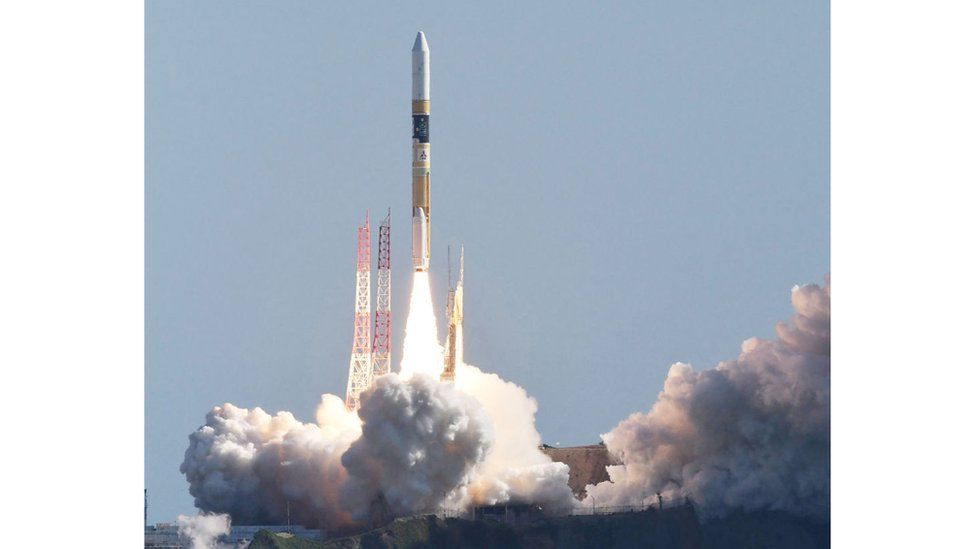
    Image caption,Jaxa’s spacecraft was launched into space in September 2023

    Slim has sent back some data to Earth but was not expected to survive for very long after touchdown.

    That’s because it was designed to be powered by solar panels, which meant it would stop working when the Sun set.

    However, the solar panels appear not to have been working at all after it landed.

    As night falls the temperature rapidly drops to as low as minus 133 degrees Celsius near the Moon’s equator, close to Slim’s touchdown site.

    The cold temperatures were expected to further damage the spacecraft and Jaxa planned to abandon it on the Moon’s surface.

    https://www.riddle.com/a/201074

    The first successful landing of a spacecraft on the Moon was the Russian Luna 2.

    The last space agency to achieve a soft landing on the Moon was the Indian Space Research Organisation in August 2023.

    Beyond these, only two other nations have achieved a soft Moon landing, they are the US and China.

    In the history of space travel, only six missions have landed humans on the Moon, the first being in 1969.

    To date, the United States is the only country that has managed to successfully land humans on the Moon.

  • Intuitive Machines: American company set for Moon landing attempt

    Texan company Intuitive Machines (IM) will attempt to put a spacecraft on the Moon in the coming hours.

    If the firm succeeds, it will be the first ever commercial venture to achieve the feat.

    It would also represent the first American soft landing on the lunar surface since the Apollo era just over half a century ago.

    IM has been contracted by the US space agency (Nasa) to carry scientific instruments to the Moon’s south pole.

    The targeted landing site is a cratered terrain next to a 5km-high mountain complex known as Malapert. The region is one of the locations on Nasa’s shortlist of places to send astronauts later this decade as part of its Artemis programme.

    The instrumentation should give planners some fresh insights on what surface conditions are like.

    Controllers at Intuitive Machines are aiming for a touchdown around 23:24 GMT, although the company has shifted this time back and forth in recent hours.

    “The six Nasa payloads and six commercial payloads expect to operate on the lunar surface for seven days before the Sun sets on our landing site at Malapert A Crater on the south pole of the Moon, rendering the IM-1 mission complete. During this time, we will be performing some amazing experiments and technology demonstrations,” said Trent Martin, the company’s vice president of space systems.

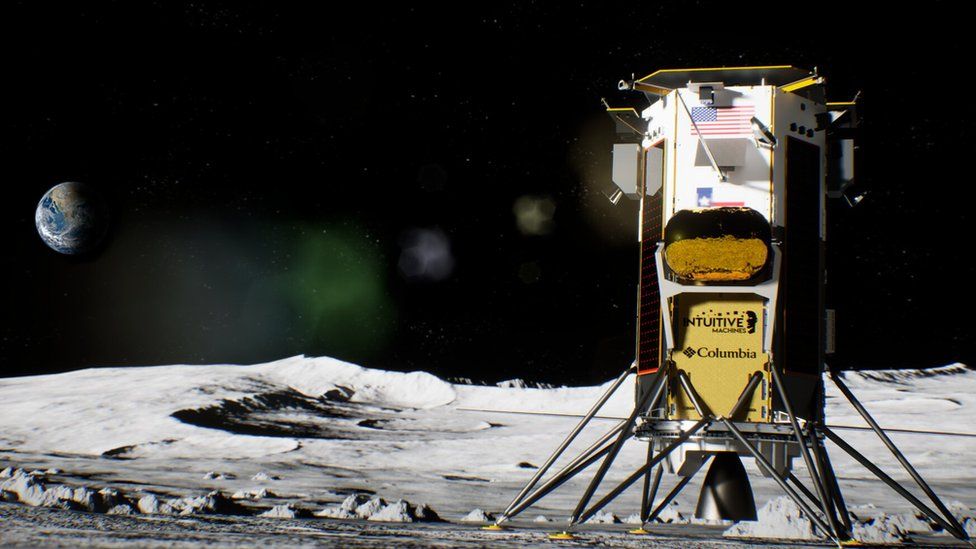
    Artwork: Odysseus
    Image caption,Artwork: A successful soft landing would be a first for a private company

    IM’s effort follows that of another private concern, Pittsburgh-based Astrobotic, which set off for the Moon in early January but couldn’t even attempt a landing because of technical problems.

    The Japanese space agency (Jaxa) had better fortune at the end of the month, reaching the surface safely on 19 January, although it lost several days of operations because it landed awkwardly, leaving its solar array pointing away from the Sun.

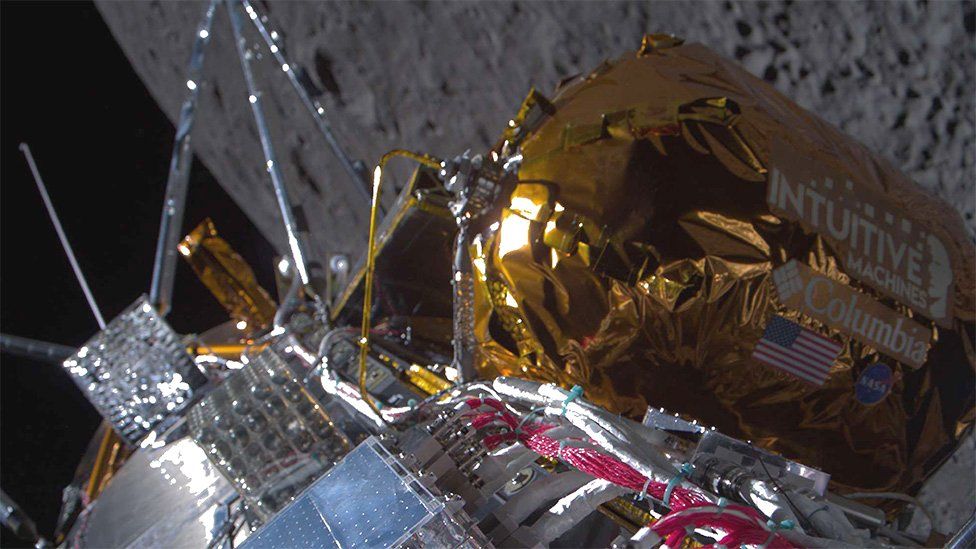
    IM’s 675kg Odysseus lander is about the size of an old British telephone box. It was despatched from Earth on 15 February and was captured into orbit around the Moon on Wednesday this week.

    Controllers will monitor the spacecraft’s descent at the company HQ in Houston but it will be Odysseus itself that will be taking the key decisions on approach.

    Initially at 100km altitude, Odysseus will use its guidance system to bring itself to a point roughly 30km above the designated landing site, and then drop straight down. The big engine on board is expected to slow the descent to just one-metre-per-second at the moment of landing.

    If the mission gets down safely it will be the southernmost landing yet executed. The Indian space agency (Isro) currently holds this record, thanks to its historic Chandrayaan-3 Vikram lander, which settled on the lunar terrain in August last year at 69 degrees South.

    IM’s target is at 80 degrees South, a mere 300km from the south pole proper.

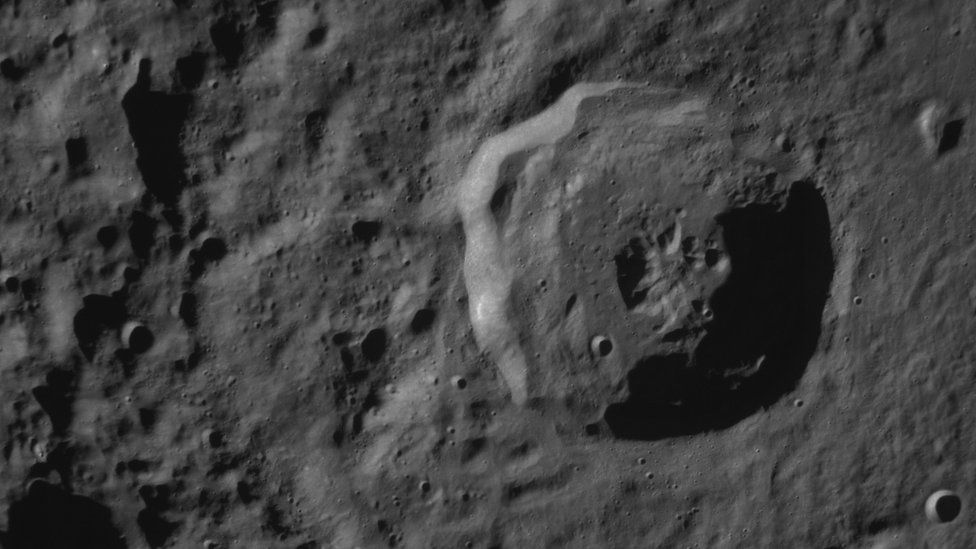
    Moon surface
    Image caption,Odysseus captured this image of the 50km-wide Bel’kovich K crater after orbit insertion

    The mission is part of Nasa’s Commercial Lunar Payload Services (CLPS) programme, in which the agency is paying various private American companies for transport services to the Moon – in this particular case, with a fee of $118M (£93m).

    “With commercial industry comes a competitive environment, which means that our investment up front ultimately gets far more for far less,” explained Nasa’s CLPS project scientist Susan Lederer.

    “Instead of one (Nasa) mission in a decade, it allows for more like 10 commercial missions to the Moon in a decade; instead of four or five instruments in that one decade, it’s more like four to five dozen instruments.”

    Nasa’s six instruments are joined on Odysseus by payloads from six other IM customers.

    These include a student camera system from Embry-Riddle Aeronautical University which will be deployed from Odysseus when it is still 30m above the lunar surface. The camera will try to take selfie images as the spacecraft touches down.

    The American artist Jeff Koons has also attached a box to the side of the lander that contains 125 small stainless steel balls to represent the Moon’s different phases through a month.

    And there’ll even be a telescope from the International Lunar Observatory Association on board, taking pictures of the Milky Way Galaxy. The Moon is an ideal place to do astronomical research because it doesn’t suffer from some of the confounding effects experienced on Earth, such as a blurry atmosphere and radio interference.

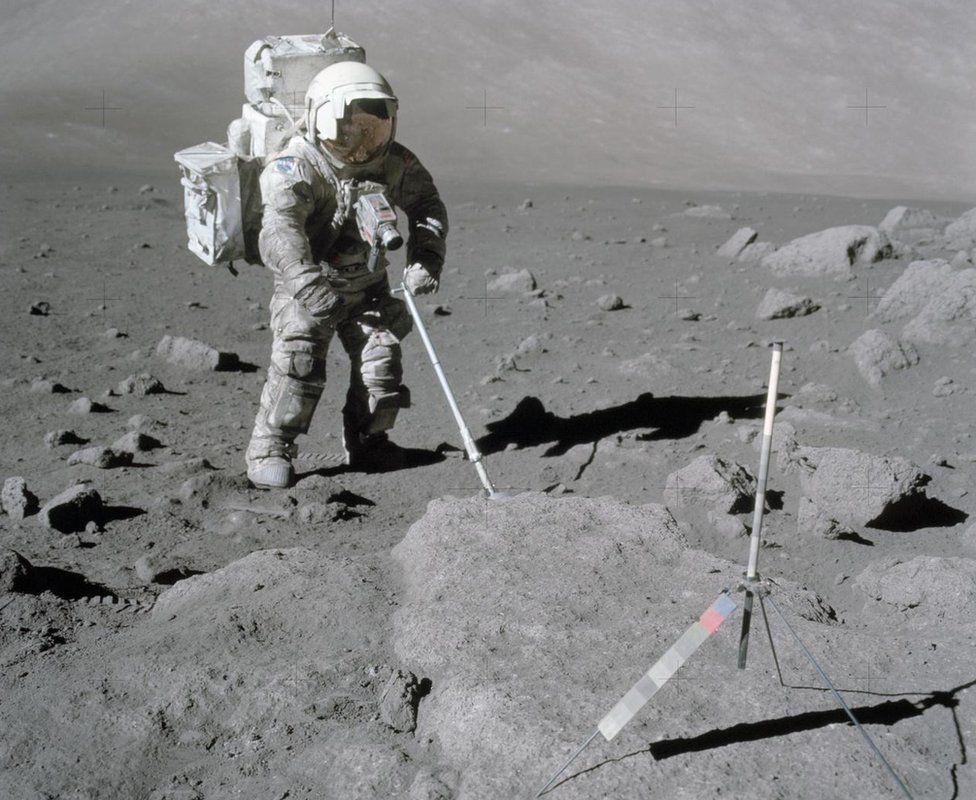
    Harrison Schmitt
    Image caption,The Apollo astronauts were in a constant battle with lunar dust

    Nasa’s payloads will concentrate on getting information that will be useful to future human exploration. There are novel technologies on Odysseus to aid precise navigation and to know exactly how much propellant is available to a craft’s thrusters.

    There will also be investigations of lunar dust, which the Apollo astronauts found to be a serious nuisance, scratching and clogging their equipment.

    The agency’s scientists want to understand better how the dust is kicked up by landing craft to hang just above the surface before then eventually settling back down.

    Historically, about half of all soft landings on the Moon have succeeded.

    This is true even in the modern era, in this century, which started with China’s Chang’e-3 mission in 2013. It worked, but of the 10 attempts since, six ended in failure.

  • Moon landing: US firm Intuitive Machines makes historic touchdown

    An American company has made history by becoming the first commercial outfit to put a spacecraft on the Moon.

    Houston-based Intuitive Machines landed its Odysseus robot near the lunar south pole.

    It took some minutes for controllers to establish that the craft was down, but eventually a signal was received.

    “What we can confirm, without a doubt, is our equipment is on the surface of the Moon and we are transmitting,” flight director Tim Crain announced.

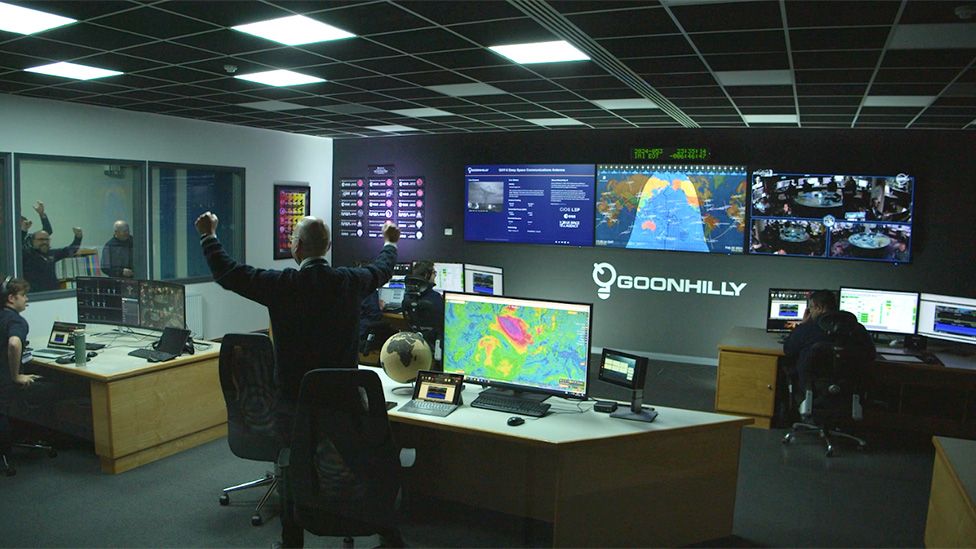
    Staff at the company cheered and clapped at the news.

    It was an important moment, not just for the commercial exploitation of space but for the US space programme in general.

    Intuitive Machines has broken the United States’ half-century absence from the Moon’s surface. You have to go back to the last Apollo mission in 1972 for an occasion when American hardware nestled down gently in the lunar soil.

    Odysseus looks at the Moon
    Image caption,Odysseus first went into orbit before making its descent

    The US space agency Nasa had purchased room on Odysseus for six scientific instruments, and its administrator Bill Nelson was quick to add his congratulations to Intuitive Machines for a mission he described as a “triumph”.

    “The US has returned to the Moon,” he said. “Today, for the first time in the history of humanity, a commercial company – an American company – launched and led the voyage up there. And today is the day that shows the power and promise of Nasa’s commercial partnerships.”

    Control room celebrations
    Image caption,Celebrations too at Goonhilly Ltd in the UK which is helping to relay communications

    Controllers had to deal with an almost mission-stopping technical problem even before the descent began.

    Odysseus’ ranging lasers, which were supposed to calculate the craft’s altitude and velocity, weren’t working properly.

    Fortunately, there were some experimental lasers from Nasa on board, and engineers were able to patch these across to the navigation computers.

    Odysseus touched down at 23:23 GMT. At first, there was no signal at all from the robot. There were plenty of nerves as the minutes ticked by, but eventually a communications link was made, albeit a faint one.

    This led to some concerns about the status of the lander. Within a couple of hours, however, Intuitive Machines was reporting that Odysseus was standing upright and sending back data, including pictures.

    Artwork: Odysseus
    Image caption,Artwork: It took a few minutes to establish communications with the lander

    The targeted landing site was a cratered terrain next to a 5km-high mountain complex known as Malapert. It’s the southernmost point on the Moon ever visited by a spacecraft, at 80 degrees South.

    It’s on the shortlist of locations where Nasa is considering sending astronauts later this decade as part of its Artemis programme.

    There are some deep craters in this region that never see any sunlight – they’re permanently in shadow – and scientists think frozen water could be inside them.

    BBC iPlayer

    9 Amazing Space Missions

    From a commercial moon mission by Intuitive Machines to Nasa’s mini helicopter on Mars: 9 amazing space missions.

    Available now on BBC iPlayer

    BBC iPlayer

    “The ice is really important because if we can actually take advantage of that ice on the surface of the Moon, that’s less materials we have to bring with us,” explained Lori Glaze, Nasa’s director of planetary science.

    “We could use that ice to convert it to water – drinkable drinking water – and we can extract oxygen and hydrogen for fuel and for breathing for the astronauts. So it really helps us in human exploration.”

    Harrison Schmitt
    Image caption,The Apollo astronauts were in a constant battle with lunar dust

    Nasa’s six payloads on board Odysseus are a mix of technology demonstration and science.

    A key investigation will be one looking at the behaviour of lunar dust, which the Apollo astronauts found to be a serious nuisance, scratching and clogging their equipment.

    The agency’s scientists want to understand better how the dust is kicked up by landing craft to hang just above the surface before then settling back down.

    The six commercial payloads on board include a student camera system from Embry-Riddle Aeronautical University, which should have been deployed from Odysseus when it was still 30m above the lunar surface.

    This system was designed to take selfie images as the robot set itself down.

    American artist Jeff Koons has also attached a box to the side of the lander that contains 125 small stainless steel balls to represent the Moon’s different phases through a month.

    Prior to Intuitive Machines’ success, only government space agencies had put spacecraft down softly on the Moon – the US, the Soviet Union, China, India and Japan.

    In January, another American company, Astrobotic, had a go. Its Peregrine lander developed technical problems en route to the Moon and gave up the opportunity of a touchdown. The robot was brought back to burn up in Earth’s atmosphere.

  • Japan Moon lander survives lunar night

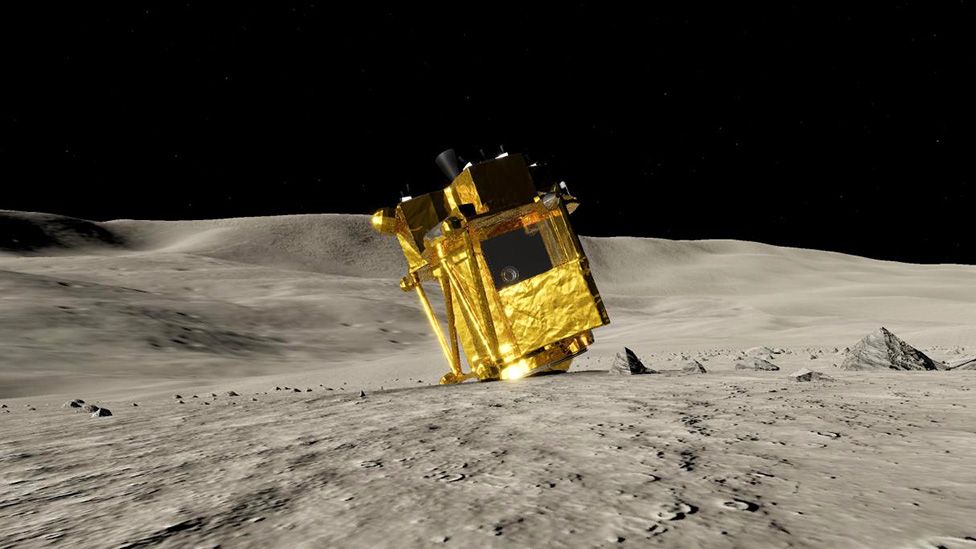
    Render of Slim's orientation
    Image caption,Jaxa produced this render of Slim to show the awkward landing orientation that pointed the solar cells away from the Sun

    By Greg Brosnan

    BBC News Climate and Science

    Japan’s Moon lander has survived the harsh lunar night, the country’s space agency said on Monday.

    “Last night, a command was sent to #SLIM and a response received,” Jaxa said on X, formerly Twitter.

    The craft was put into sleep mode after an awkward landing in January left its solar panels facing the wrong way and unable to generate power.

    A change in sunlight direction later allowed it to send pictures back but it shut down again as lunar night fell.

    Jaxa said at the time that Slim (Smart Lander for Investigating Moon) was not designed for the harsh lunar nights, which last for the equivalent of two Earth weeks.

    It said it planned to try to operate again from mid-February, when the Sun would shine again on Slim’s solar cells.

    Jaxa said that communication with the lander was terminated after a short time – it was lunar midday, meaning the temperature of the communications equipment was very high.

    It said preparations were being made to resume operations when instrument temperatures had cooled sufficiently.

    During its previous brief period of re-awakening, Slim was able to study its surroundings in detail and transmit new images to Earth.

    Jaxa will be hoping that having survived the lunar night it will be able to continue its work.

    The landing in January made Jaxa only the fifth national space agency to achieve a soft touchdown on the Moon – after the US, the former Soviet Union, China and India.

    A US spacecraft, the Odysseus Moon lander, made history on Thursday by becoming the first ever privately built and operated robot to complete a soft lunar touchdown.

    Like Slim, it also landed awkwardly. Controllers at the operating company, Intuitive Machines, think their robot tipped on to its side at the moment of touchdown. Odysseus does, however, appear still to be functional and is communicating with Earth.

    No pictures from the mission at the surface have yet been released.